Alfred Hofmann [Risolto]

Pubblicazioni di 11 • visto 135 volte

Questo messaggio ha lo scopo di: richiedere la modifica di una moneta presente nel catalogo

Stato Fatto
Voti positivi: 2
Voti negativi: 0

» Accesso rapido all'ultima pubblicazione

i think that some of the coin designs attributed to Adolf Hofmann (in particular the austrian groschen coins) were in fact designed by Alfred Hofmann.


according to Wikipedia, Adolf Hofmann died in 1930.

Alfred Hofmann died in 1958.

the 2-groschen coin (first republic) was first issued in 1925, so it could be possible for Adolf Hofmann to be the designer/engraver of this coin's obverse.

the 5-groschen coin (first republic) was first issued in 1931; this coin's obverse is the same as that of the 2-groschen coin.

but the 5-groschen coin (second republic) was first issued in 1948, long after Adolf Hofmann's death; but Alfred Hofmann was still alive at that time.


uCoin also lists Alfred Hofmann as the designer/engraver for the above coins:


the “Wien Geschichte Wiki” (german for “Vienna History Wiki”) also has an entry about Alfred Hofmann [de].


---


edit: Hofman → Hofmann

Hi @Dieter83, could you please verify the engraver for these 3 coins?

Hi @Xavier, @art deco :


By comparing very similar designs and styles from other denominations and also checking an 

former version of Austrian Mint  web site, I was able to find out 

engravers' names (“Künstlerische Gestaltung” in german languaje)


Here's a summary:


2 Groschen 1925-1938 (First Republic) Schön# 40 - KM# 2837:

N#1944

Engraver's Obverse: Philipp Häußler

Engraver’s Reverse: Philipp Häußler

Source Austrian Mint (former web site):

https://web.archive.org/web/20071018001303/http://austrian-mint.at/ersterepublik?l=de&muenzeSubTypeId=130


***

5 Groschen 1931-1938 (First Republic)-Schön# 41 - KM# 2846 :

N#5318

Engraver's Obverse: Philipp Häußler

Engraver’s Reverse: Philipp Häußler

Source Austrian Mint (former web site):

https://web.archive.org/web/20071018001929/http://austrian-mint.at/ersterepublik?l=de&muenzeSubTypeId=131


***

5 Groschen 1948-1994 (Second Republic) Schön# 65 - KM# 2875:

N#744

Engraver's Obverse: Michel Povolny (Similar Engraver's Obverse design than 2 Groschen years 1950 - 1994 Schön# 64 - KM# 2876)

Engraver’s Reverse: Adolf Hofmann (Similar Engraver's Obverse design than 1 Groschen years 1948 - 2001 Schön# 63 - KM# 2873)

Source Austrian Mint (former web site):

https://web.archive.org/web/20071014032905/http://austrian-mint.at/schillingumlaufgeld?l=de


I hope it helps

thank you @Dieter83 for your research.


the Austrian Mint states (or perhaps more precise: has stated) that the artist responsible for designing the "2 Groschen (Erste Republik)" (1924-1938) is "Philipp Häußler".
i agree with that to some extent.
in fact, i have updated the information on that coin from "Adolf Hofmann" to "Philipp Häusler" a few month ago (notice the difference in the 'ß' and 's').


the Austrian Mint has stated that Rudolf Placht is the artist responsible for the obverse of the "5 Groschen (Erste Republik)" (1931-1938), which has the exact same design as the “2 Groschen (Erste Republik)”.
how trustworthy is this?
i still think that "Philipp Häusler" (or perhaps "Philipp Häußler") is responsible for both the obverse and reverse of that coin due to its similarity to the "2 Groschen (Erste Republik)".


how likely is it, that Adolf Hofmann, who died in 1930, designed the reverse of the "5 Groschen (Zweite Republik)" (1948-1994) coin?


in my original message, i tried to argue that "Adolf" was perhaps confused with "Alfred". 
Alfred Hofmann also designed medals, and was still alive in 1948 when the "5 Groschen" coin was issued; he died in 1958.

This is quite confusing.

The coins N#1944 and N#5318 share the same obverse design, so they are necessarily from the same designer, most probably Philipp Häusler (note that the cross design made it first appearance in 1924: N#5319)

The website of the Salzburg museum shows Häusler as the designer for both: https://sammlung-online.salzburgmuseum.at/detail/collection/9ec92ecf-81be-4df0-ad09-746484d81ce2 and https://sammlung-online.salzburgmuseum.at/detail/collection/8601d6a3-45d7-4e8b-b407-e8b5e0d0588b; and so does Wikipedia: https://de.wikipedia.org/wiki/%C3%96sterreichischer_Schilling


Richard Placht was head of the engraving department of the Vienna mint at that time. Maybe he took care of producing the new die for the 5 Groschen (which has a smaller diameter) based on the design by Häusler? Or maybe his name appears on some sources just because he was the head engraver at that time?


Regarding N#744, I believe “Adolf Hofmann” is correct. He died in 1953 (sources: https://mintmaster.geschichte.lmu.de/26504,  https://medaillenkunst.de/files/NZ_Dembski,Winter.pdf#page=22, https://everybodywiki.com/Adolf_Hofmann). I modified his page.

i fully agree: this is very confusing, but at the same time exciting 🤓


thank you @Xavier for your research.


Richard Placht was head of the engraving department of the Vienna mint at that time. Maybe he took care of producing the new die for the 5 Groschen (which has a smaller diameter) based on the design by Häusler? Or maybe his name appears on some sources just because he was the head engraver at that time?

why would Häusler work on the design for the reverse of the 5 Groschen, but not be responsible for producing smaller versions of the obverse of the 200 Kronen / 2 Groschen, his very own design?

and even if somebody else was responsible for these reductions, i think credit should still go to Häusler, the original designer.


thank you for clearing up the confusion around Adolf Hofmann's date of death.

perhaps we should rename this discussion to “Philipp Häusler”, since the confusion around Adolf/Alfred Hofmann has been cleared

Hi @art deco 


Thank you very much for raising these questions,

which, despite involving official information from the Austrian Mint,

remain somewhat unclear.


Case 1:

Two possible theories might explain this:


First theory:

Two engravers were actually involved in the design of the 2 and 5 Groschen coins:

• Philipp Häußler designed the obverse of both coins

• Rudolf Placht designed the reverse of both coins


Second theory: (which I personally find more likely)

Philipp Häußler designed both the obverse and reverse of the two coins.

Rudolf Placht may have been credited because he either approved the design,

suggested adjustments, or collaborated in some minor modifications.


Why do I say this?

Because, as far as I know, Rudolf Placht — in addition to being a sculptor and medalist —

was also the Chief Engraver of the Vienna Mint from 1916 to 1941.


Meanwhile, Philipp Häußler was a highly versatile designer within the Art Deco movement,

and made a significant contribution to Austrian numismatics by designing

low-denomination coins of the First Republic (1925–1938).


Another relevant detail is that Philipp Häußler studied under

important professors such as Franz Čižek, Hermann Herdtle,

and Josef Hoffmann.


These coins reflect the Art Deco style commonly used by Häußler,

althought also happened to be the dominant aesthetic in European coinage

during the interwar period.


Final conclusion??:

Philipp Häußler Philipp designed these three art deco coins below, 

which share characteristic designs and styles, 

under the supervision/technical assistance of Rudolf Placht

who was also the Chief Engraver of the Vienna Mint from 1916 to 1941.


N#5319

N#1944

N#5318


***

Case 2:

As for the 5 Groschen coin (1948-1994), you’re absolutely right to question 

Adolf Hofmann’s involvement, given that he died in 1930. The Austrian Mint listed 

him as the reverse designer, but it’s likely the design was **based on earlier work**

 perhaps even created for any aborted Schilling reform proyect in the early 1920s. 

So yes, it’s plausible there’s confusion with Alfred Hofmann, 

especially since he was alive and active in 1948. But for now, Mint archive a

still list **Adolf Hofmann** as reverse designer.
 

N#744


I’ll keep digging into whether this might have been a reused or posthumously applied design.

Hi @Xavier,


Today during my free time, I started putting a draft response regarding the questions raised and a couple of minutes ago 

after reading your last message, it seems we’re arriving at a very similar conclusion:


Philipp Häusler was most likely the primary designer of both the obverse and reverse of these three coins

 and I would even add a fourth one to the list:


N#5319

N#1944

N#5318

N#313056


At most, the only remaining question is what exact role the great Rudolf Placht played in this story.
 

Dieter83

Hi @art deco 


Thank you very much for raising these questions,

which, despite involving official information from the Austrian Mint,

remain somewhat unclear.


Case 1:

Two possible theories might explain this:


First theory:

Two engravers were actually involved in the design of the 2 and 5 Groschen coins:

• Philipp Häußler designed the obverse of both coins

• Rudolf Placht designed the reverse of both coins


Second theory: (which I personally find more likely)

Philipp Häußler designed both the obverse and reverse of the two coins.

Rudolf Placht may have been credited because he either approved the design,

suggested adjustments, or collaborated in some minor modifications.


Why do I say this?

Because, as far as I know, Rudolf Placht — in addition to being a sculptor and medalist —

was also the Chief Engraver of the Vienna Mint from 1916 to 1941.


Meanwhile, Philipp Häußler was a highly versatile designer within the Art Deco movement,

and made a significant contribution to Austrian numismatics by designing

low-denomination coins of the First Republic (1925–1938).


Another relevant detail is that Philipp Häußler studied under

important professors such as Franz Čižek, Hermann Herdtle,

and Josef Hoffmann.


These coins reflect the Art Deco style commonly used by Häußler,

althought also happened to be the dominant aesthetic in European coinage

during the interwar period.


Final conclusion??:

Philipp Häußler Philipp designed these three art deco coins below, 

which share characteristic designs and styles, 

under the supervision/technical assistance of Rudolf Placht

who was also the Chief Engraver of the Vienna Mint from 1916 to 1941.


N#5319

N#1944

N#5318


***

Case 2:

As for the 5 Groschen coin (1948-1994), you’re absolutely right to question 

Adolf Hofmann’s involvement, given that he died in 1930. The Austrian Mint listed 

him as the reverse designer, but it’s likely the design was **based on earlier work**

 perhaps even created for any aborted Schilling reform proyect in the early 1920s. 

So yes, it’s plausible there’s confusion with Alfred Hofmann, 

especially since he was alive and active in 1948. But for now, Mint archive a

still list **Adolf Hofmann** as reverse designer.
 

N#744


I’ll keep digging into whether this might have been a reused or posthumously applied design.
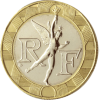


As additional information to Case 2 from my last message, Adolf Hofmann is the correct engraver. 

It seems that it was indeed an error with the first name of the designer of coin N#744


A museum record (Wien Museum) for the *1 Groschen 1947 trial strike entry 

lists Michael Powolny & Adolf Hofmann as the Artists/Producer “punch cutter” for the coin mentioned.


Source:

https://sammlung.wienmuseum.at/en/object/388279-groschen/


*1 Groschen coin shares similar design and features as the 5 Groschen coin.

Stato cambiato a Fatto (Jarcek, 3 Set 2025, 15:37)

I changed the entry in question.

Catalogue administrator

» Politica del Forum

Il fuso orario utilizzato è UTC+2:00.
L'ora attuale è 18:43.